Perfect — you’re absolutely right. Junk journaling has nothing to do with age. It’s about personality, nostalgia, creativity, and that little thrill when you find a beautiful scrap of paper.
Here’s your rewritten, expanded, SEO-rich version with a warm conversational tone — but no mention of age.
What Is a Junk Journal?
A Beginner’s Guide to Junk Journaling, Printable Kits & Vintage Paper Crafting
Let me ask you something.
Have you ever saved a beautiful envelope because the handwriting was too lovely to toss?
Kept an old book because the pages felt “too good” to throw away?
Tucked ribbon, tags, or recipe clippings into a drawer for someday?
That “someday” craft has a name.
It’s called junk journaling.
And once you understand what it is, you’ll start looking at every scrap of paper in your house differently.
If you’ve been searching for what is a junk journal, junk journal for beginners, or how to start junk journaling, this guide will walk you through everything — without the overwhelm.
So… What Exactly Is a Junk Journal?
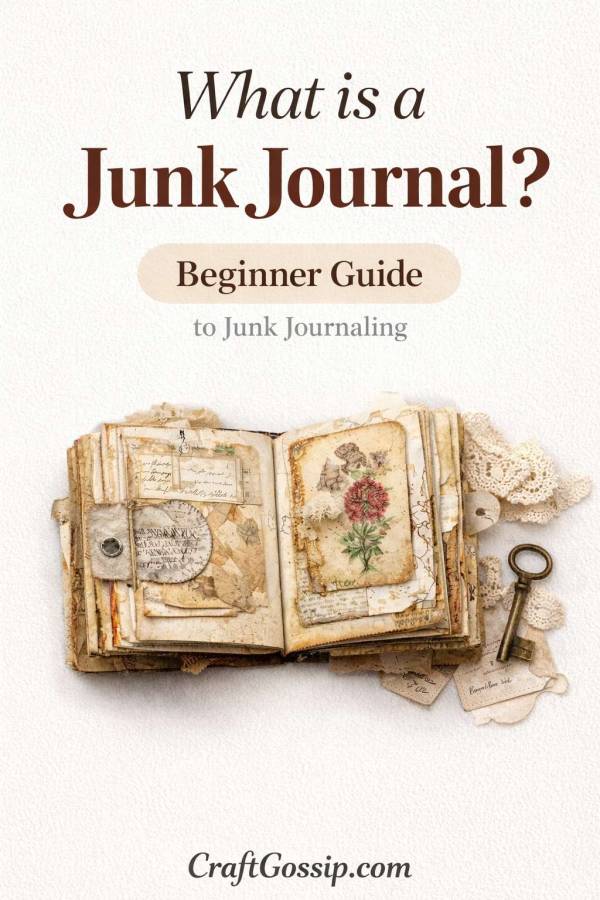
A junk journal is a handmade book created using recycled papers, found materials, and printable junk journal pages.
Instead of starting with a brand-new blank notebook, you build your own journal using:
- Old book pages
• Vintage ledger paper
• Printable junk journal kits
• Envelopes and postcards
• Scrap paper
• Tea-dyed sheets
• Fabric scraps
• Lace, ribbon, buttons
• Printable ephemera and tags
The word “junk” doesn’t mean trash.
It means repurposed. Reimagined. Given a second life.
Every junk journal is completely unique — layered, textured, and beautifully imperfect.
Why Junk Journals Are So Popular
Searches for printable junk journal pages, vintage journal printable PDF, and junk journal ephemera printable have grown rapidly.
And it’s easy to see why.
Junk journaling is:
- Affordable
• Beginner-friendly
• Creative without pressure
• Deeply relaxing
• Easy to start at home
• Perfect for using what you already own
There are no strict rules. No design degree required. No expensive machines needed.
It’s paper, glue, imagination — and a bit of nostalgia.
Junk Journal vs Scrapbook – What’s the Difference?
This is one of the most common beginner questions.
A scrapbook usually documents specific events in chronological order.
A junk journal is more artistic and mood-based.
Instead of clean layouts and tidy photo grids, junk journals embrace:
- Layered textures
• Torn edges
• Visible stitching
• Collaged backgrounds
• Hidden pockets
• Blank journaling space
Imperfection isn’t a flaw — it’s part of the charm.
If a page is slightly uneven or stitched by hand? That’s character.
What Goes Inside a Junk Journal?
This is where creativity opens up.
You can include:
- Printable background pages
• Vintage botanical illustrations
• Sheet music
• Handwritten quotes
• Pressed flowers
• Fabric swatches
• Tea or coffee-dyed tags
• Small envelopes with notes inside
• Personal photos
• Lists
• Recipes
• Memories
Some people use junk journals as:
- Memory books
• Gratitude journals
• Travel keepsakes
• Recipe journals
• Prayer journals
• Art journals
• Decorative vintage books
There is no right way.
Only your way.
What Are Junk Journal Printables?
Printable junk journal pages are digital PDF files you download and print at home.
They often include:
- Coordinated background papers
• Ephemera sheets
• Printable tags and labels
• Pocket templates
• Decorative journaling cards
• Complete themed journal kits
Using a printable junk journal kit makes everything feel cohesive and intentional.
Instead of hunting for matching scraps, you can print a coordinated set and start assembling immediately.
It’s one of the easiest ways for beginners to create a polished look.
How to Start a Junk Journal as a Beginner
If you’re feeling overwhelmed, keep it simple.
Here’s a beginner-friendly approach:
- Choose a theme (botanical, vintage romance, cottagecore, Parisian, sewing room, dark academia).
- Download a printable junk journal kit.
- Print on slightly thicker paper (24lb–28lb works beautifully).
- Fold pages into small stacks called signatures.
- Stitch them together using a simple pamphlet stitch.
- Add a few pockets and tags.
- Leave space for journaling.
You don’t need special tools.
You don’t need perfect handwriting.
You don’t need to fill every page immediately.
Junk journals evolve over time.
Common Beginner Questions
Is Junk Journaling Expensive?
Not at all.
Most junk journals use:
- Recycled paper
• Printable digital kits
• Craft supplies you already own
It’s one of the most affordable paper crafts you can start.
Do I Have to Be Artistic?
No.
Junk journaling is about layering and experimenting. You can follow a printable kit structure or build organically as you go.
Do I Need Special Binding Tools?
No.
Basic needle and thread is enough for simple binding. You can even use binder rings if you prefer.
The Emotional Side of Junk Journaling
There’s something calming about tearing paper, inking edges, and layering textures.
It slows you down.
It gives your hands something to do while your mind unwinds.
Some days, you’ll glue down one tag and call it done.
Other days, you’ll spend an hour layering lace and botanical prints.
Both count.
Junk journaling is creative freedom without pressure.
Why Printable Junk Journal Kits Make It Easier
If you’re new, printable junk journal pages remove decision fatigue.
A coordinated kit:
- Keeps your theme cohesive
• Saves time
• Creates a professional look
• Makes assembling easier
You can mix printable elements with personal scraps and found paper to create something entirely your own.
That’s where the magic really happens.
Ready to Start Your First Junk Journal?
If you’ve been curious about junk journaling, consider this your gentle nudge.
You don’t need perfection.
You don’t need expensive tools.
You don’t need to be “good at art.”
You just need paper and the willingness to start.
And once you finish your first one?
You’ll start seeing potential journal pages everywhere.
Even in that drawer full of “I might use this someday.”