Starting an art journal is exciting right up until you try to figure out what supplies you actually need.
Suddenly there are paints, pens, papers, adhesives, stamps, brushes, tapes, markers, gels, pastes, and enough “must-have” tools to make any beginner want to shut the craft drawer and go make a cup of tea instead.
The good news is this: you do not need a huge stash to begin art journaling. You just need a few reliable supplies that suit the way you like to create.
If you love paint, your basics will look different from someone who prefers collage. If you mostly want to write and doodle, you do not need to invest in every mixed media product on the shelf. The best art journaling supplies for beginners are the ones that help you actually make pages, not the ones that sit untouched because they felt too fancy to use.
This guide breaks down the essential art journaling supplies, what they do, and how to choose the best ones for your style without wasting money.
What do you need to start an art journal?
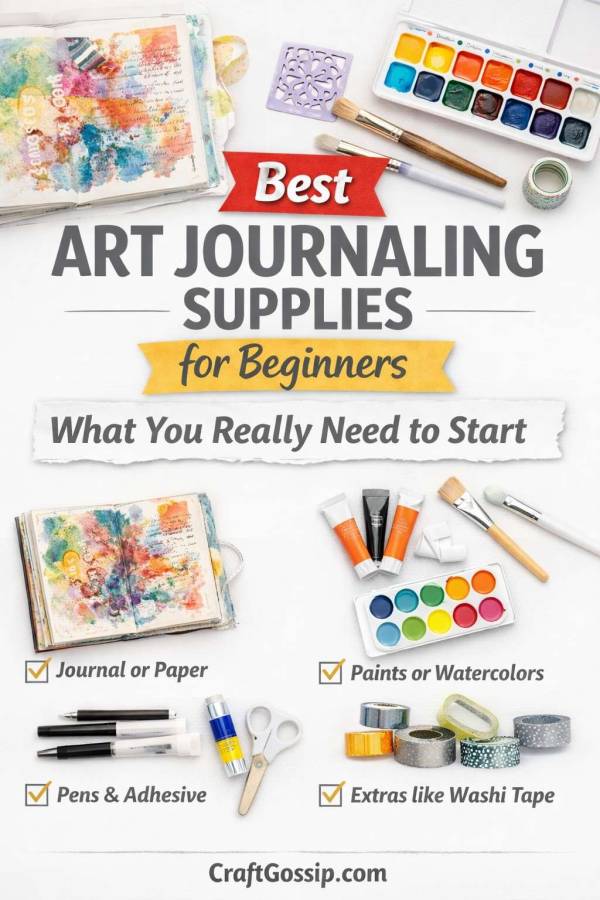
A simple beginner art journaling kit usually includes:
- a journal or sturdy paper
- one colouring medium
- a pen or pencil
- scissors
- adhesive
- a few extras for texture or decoration
That’s enough to start.
You do not need a fully stocked studio. You do not need every trendy supply. You do not need twelve shades of blue paint unless that genuinely brings you joy, in which case I support you completely.
1. Choose the right art journal or paper
Your paper matters more than almost anything else.
If you want to use wet supplies like acrylic paint, watercolor, or collage glue, thin paper will wrinkle, buckle, and generally behave like it is personally offended by your creative choices. A heavier mixed media journal holds up much better.
Good options for beginners:
Mixed media journal
A great all-rounder for paint, collage, stamps, and writing.
Watercolor journal
Best if you love washes, loose painting, and softer backgrounds.
Sketchbook
Better for dry materials like pencil, pen, and light marker.
Composition notebook or cheap notebook
Fine for writing-based journals, idea pages, and low-mess play.
If you want one simple recommendation, go for a mixed media journal. It gives you the most flexibility while you work out what you enjoy.
2. Acrylic paint is one of the easiest supplies to start with
If you are brand new to art journaling, acrylic paint is one of the most beginner-friendly options.
It dries quickly, covers well, layers nicely, and works beautifully for bold backgrounds. Once it dries, it stays put, which makes it easier to write and collage on top later.
Why beginners love acrylic paint:
- easy to use
- dries fast
- great for layering
- works on many surfaces
- gives strong colour payoff
Start with just a few colours rather than buying a giant set. White, black, and a few favourites will take you surprisingly far.
3. Watercolors are lovely for softer art journal pages
If you prefer soft, dreamy pages instead of bold painted backgrounds, watercolor may be more your style.
Watercolors are perfect for loose florals, gentle backgrounds, splashes of colour, and pages that feel light and airy. They do behave differently from acrylics though. They can reactivate with water, so layers may move around if you keep adding moisture.
That can be part of the charm, but it helps to know before you begin.
Watercolor is great for:
- soft washes
- layered colour
- expressive backgrounds
- floral or nature-inspired pages
For beginners, a small watercolor set is more than enough to explore with.
4. Pens are essential for writing, doodling, and detail work
A lot of people think paint is the exciting part, but pens are often what pull the page together.
You will want something for journaling, outlines, doodles, labels, and those little final marks that make a page feel finished.
Helpful pens to keep on hand:
Waterproof black pen
Great for writing, outlining, and sketchy details.
White gel pen
Perfect for highlights and writing on dark backgrounds.
Pencil
Underrated, reliable, and often the one thing that works when other pens refuse to cooperate.
Brush pen or marker
Useful for bold lettering and expressive marks.
Not every pen works well over paint, so testing supplies on the back page or a scrap sheet is always worth doing.
5. Adhesive makes collage pages much easier
If you plan to add paper scraps, book pages, printed quotes, magazine clippings, tissue paper, or photos, you need a decent adhesive.
A glue stick works for light use, but liquid glue or matte medium usually gives a better result for mixed media pages.
Adhesive options for art journaling:
Glue stick
Easy and tidy for basic paper layers.
Liquid glue
Good for stronger hold.
Matte medium
Excellent for collage, layering, and sealing thinner papers.
If you love collage, matte medium is one of those supplies you will reach for again and again.
6. Washi tape is both practical and addictive
Washi tape may look like a decorative extra, but it is actually very useful in art journaling.
You can use it to frame sections, add pattern, create borders, attach fold-out notes, or fill awkward empty spaces that need “something” but not too much.
Easy ways to use washi tape:
- border a page
- tape in ephemera
- divide sections
- add quick colour and pattern
- cover messy edges
Also, no one who loves paper crafts ever seems to own just one roll. It multiplies quietly.
7. Scissors and simple tools go a long way
You do not need expensive tools to make interesting pages.
A good pair of scissors, an old gift card for scraping paint, a sponge, a stencil, or even random household objects can create texture and pattern.
Useful beginner tools:
- sharp scissors
- old loyalty card or scraper
- sponge or foam applicator
- stencil
- stamps
- small palette knife
Art journaling is one of those crafts where everyday objects often work just as well as specialty tools.
8. Brushes do not need to be complicated
Brush shopping can get overwhelming fast, but you really only need a few to begin.
A simple starter brush set:
- one medium round brush
- one flat brush
- one small detail brush
That’s enough for most beginner pages.
If you are using acrylics, rinse your brushes quickly because dried acrylic can ruin them fast. If you are using watercolor, softer brushes can make painting feel much smoother.
9. Collage papers and scraps add instant interest
Some of the best art journaling supplies are probably already in your house.
Old book pages, wrapping paper, tissue paper, receipts, tags, envelopes, magazine clippings, scrapbook paper scraps, packaging, and printed words can all become part of your pages.
These bits and pieces add texture, story, and character without costing much at all.
Great collage materials to save:
- old maps
- music sheets
- book pages
- tissue paper
- product packaging
- junk mail patterns
- scrapbook leftovers
- handwritten notes or photocopies
This is also a lovely way to make pages feel more personal.
10. Stamps and stencils help when you don’t know what to do next
Some days you sit down to journal and your brain just shrugs.
That is where stamps and stencils can really help. They give you an easy starting point and make backgrounds look layered without much effort.
They are useful for:
- background texture
- repeated patterns
- titles and labels
- visual balance
- fast page building
You do not need a huge collection. One alphabet stamp, one script stamp, or a basic stencil can be enough to get started.
11. The best beginner supply kit is a small one
One of the biggest mistakes new art journalers make is buying too much too soon.
It feels productive, but it often leads to overwhelm. Too many choices can make it harder to begin. A smaller kit helps you learn what you actually enjoy using.
A practical beginner art journaling supply list:
- 1 mixed media journal
- 1 small set of acrylic paints or watercolors
- 1 waterproof black pen
- 1 white gel pen
- 1 pencil
- 1 glue stick or matte medium
- 1 pair of scissors
- 2 or 3 brushes
- 1 roll of washi tape
- a few collage papers
That is plenty to start making creative, layered, interesting pages.
Common beginner mistakes when buying art journaling supplies
Buying trendy supplies before learning the basics
Pretty products are tempting, but good paper, a solid pen, and reliable paint matter more.
Using the wrong paper for wet media
This is one of the fastest ways to get frustrated.
Expecting every pen to write over paint
Some won’t. Test first.
Waiting until you have everything
You never will. Crafters know this better than anyone.
How to choose art journaling supplies based on your style
If you are not sure what to buy first, think about how you want your pages to look and feel.
If you love writing and memory keeping
Start with a smooth journal, waterproof pen, pencil, and a few decorative extras.
If you love paint and colour
Start with a mixed media journal, acrylics or watercolor, and a few brushes.
If you love collage and layering
Start with matte medium, scissors, paper scraps, and washi tape.
If you love experimenting
Add stamps, stencils, texture tools, and found objects from around the house.
The right supplies are the ones that match your creative habits.
Start simple and let your supplies grow with you
Art journaling should feel playful, creative, and personal. It should not feel like you need a shopping spreadsheet before you can begin.
Start with a few good basics. Make some messy pages. Test your pens. Glue down scraps. Paint over something you do not like. Add words even if they are crooked. That is part of the charm.
The best art journals are not the most perfect ones. They are the ones that get used.
And usually, they are the ones with paint on the table, paper scraps on the floor, and at least one page that went completely sideways before becoming your favourite.