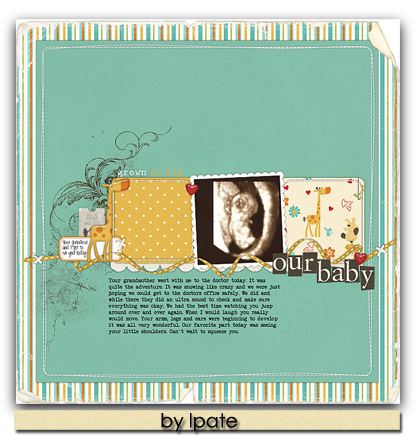
Get ,ore inspiration from her gallery.
Themes, layouts and inspirations

Get ,ore inspiration from her gallery.
There is apparently a point in junk journaling where you’re supposed to look at your page and think, “Yes, that’s enough.”
Maximalist junk journalers have collectively decided to ignore that point completely.
And I am rather enjoying it.
One of the most fun junk journaling looks appearing everywhere in 2026 is what I’ve started thinking of as the “Everything At Once” junk journal spread — pages packed with torn paper, stickers, labels, tickets, colour, handwriting, photographs, packaging, tape and whatever else happened to be sitting on the craft table.
The idea isn’t simply to make a messy page.
It’s intentional creative excess.
Instead of carefully choosing three coordinating embellishments and leaving a tasteful amount of white space, you keep building until the page feels almost like a drawer full of memories has been tipped directly into your journal.
And for those of us with boxes of paper scraps we’ve been saving because they are “too pretty to throw away,” this may finally be our moment.
Maximalist junk journaling takes the traditional layered junk journal aesthetic and turns the volume right up.
You might use:
Sometimes all on the same two-page spread.
Traditional scrapbook design often teaches us to create a focal point, repeat colours and give the eye somewhere to rest.
Maximalist journaling cheerfully bends those rules.
There can be several focal points.
Colours don’t necessarily need to match.
And instead of negative space, empty areas are invitations to add another tiny sticker.
If you’re completely new to this craft, start with our beginner’s guide to junk journaling before diving into the more gloriously chaotic version.
There is a difference between a maximalist journal spread and simply covering every centimetre of paper.
The best pages still have depth.
Think in layers.
Start with large pieces such as:
Tear rather than neatly cut some of the edges.
Then add medium-sized pieces:
Finish with the little details:
We already have some lovely examples of building dimension in our roundup of scrapbook layouts with lots of layers, but with this maximalist junk journal style you can push the idea much further.
Here’s a wonderfully dangerous little challenge.
Create your page normally.
Then, when you think it’s finished, add one more thing.
Then another.
And possibly another.
Try a tiny label tucked behind the photograph.
Add half a sticker disappearing under an envelope.
Put a torn strip of paper along the edge.
Add handwriting over something you would normally leave untouched.
The goal isn’t to make the page unreadable. It’s to get past that cautious stage where everything is beautifully arranged but still feels slightly too deliberate.
Sometimes the interesting bit happens after you thought you were finished.
I know.
That sticker is pretty.
You might need it for an even better project.
And apparently we are all going to live for 300 years and eventually create exactly the project worthy of that one tiny mushroom sticker.
Use it.
In fact, maximalist junk journaling is an excellent excuse to finally attack those sticker sheets you’ve been collecting.
Mix:
Don’t worry too much about whether they came from the same collection.
Repeating one colour somewhere else on the page is usually enough to make something unexpected feel intentional.
Sticker books and large mixed packs from Amazon are particularly handy for this style because you need lots of small elements rather than one expensive coordinated collection.
This may be the easiest way to instantly loosen up a journal spread.
Put the paper trimmer down.
I repeat: step away from the perfectly straight edge.
Tearing creates little flashes of the white paper core and gives overlapping pieces obvious separation.
You can:
Torn edges also help very different patterns sit together without looking like you’ve accidentally glued two unrelated scrapbook papers beside each other.
This is where maximalist journaling becomes particularly fun.
You don’t need to choose a tasteful palette consisting of sage green, cream and exactly one restrained shade of brown.
Try:
pink + orange + red
turquoise + mustard + purple
neon yellow + vintage brown
floral paper + checkerboard + typography
retro packaging + Victorian ephemera
The trick isn’t necessarily matching.
It’s repetition.
If you add one bright orange sticker to a predominantly blue page, repeat a tiny amount of orange somewhere else.
Suddenly it looks deliberate.
Crafting has a remarkable ability to turn “I have absolutely no idea what I’m doing” into “yes, that was clearly a design decision.”
This is the part I particularly love.
Junk journals don’t need to become scrapbooks made entirely from newly purchased “junk journal supplies.”
Use actual bits from your life.
Try keeping:
A recent shopping list might not feel remotely interesting today.
In ten years, it can be fascinating.
And real-life scraps immediately make an “Everything At Once” spread feel more personal.
If you need more inspiration, have a look through these 15 junk journal spread ideas — particularly the pages that combine memories, ephemera, transparent layers and deliberately messy layouts.
One reason maximalist journals look so wonderfully chunky is that everything doesn’t remain politely inside the page.
Allow little elements to protrude.
Add:
Suddenly the journal looks interesting before you’ve even opened it.
You can even sew scraps of fabric and ribbon onto cardstock or recycled packaging. Our tutorial for sewing fabric and ribbon scraps onto cardboard for junk journals is perfect for creating covers, pockets and dimensional inserts for this style.
Here’s a fun spread idea if you’ve accumulated enough stickers to open a small stationery shop.
Choose one sticker sheet.
Your challenge is to use every sticker on it.
Large stickers become focal points.
Medium stickers bridge gaps between paper layers.
Tiny stars, hearts, dots and flowers fill awkward spaces.
Even those mysterious tiny decorative stickers that never seem to have an obvious purpose finally get used.
Add torn paper, handwriting and saved packaging around them until the whole page becomes one gloriously busy composition.
This is also a clever stash-busting exercise because you’re not opening another sticker pack until the first one is empty.
Well.
That’s the theory.
A maximalist page doesn’t need everything visible at once.
In fact, hidden elements make these journals even better to flip through.
Try adding:
Now you can squeeze even more onto the page without technically requiring more page.
I consider this excellent crafting mathematics.
Printable junk journal images are brilliant for maximalist pages because you can resize them before printing.
Instead of adding three large pieces, print a page full of miniature:
Then tuck them between your larger layers.
Our free printable vintage French junk journal images work particularly well if you want a little vintage typography mixed through a brighter modern page.
And don’t feel obliged to use your printables exactly as they arrive.
Tear them.
Write over them.
Stamp across them.
Cut half of an image away.
Layer stickers over the top.
Once they’re on your desk, they’re craft supplies, not museum exhibits.
You don’t actually need much specialist equipment.
Start with:
A small paper trimmer is still handy despite everything I said about tearing paper. Sometimes you really do need a straight edge.
For heavily layered pages, I also prefer a good permanent glue stick or archival paper adhesive. Cheap glue can start lifting once you’ve stacked several different paper finishes together.
A small brayer or old gift card is useful for pressing glued layers flat without getting adhesive all over your fingers.
Not that having glue all over your fingers isn’t an authentic junk journaling experience.
Rather than choosing an aesthetic, document one ordinary day.
Collect little pieces as you go:
Morning coffee label.
Grocery receipt.
Fruit sticker.
A note someone left on the bench.
Packaging from something you opened.
A screenshot printed in miniature.
A photograph.
Your handwritten to-do list.
That evening, put absolutely everything onto a spread.
Fill the gaps with stickers and colourful paper.
These are often far more meaningful than pages created entirely from decorative supplies because they capture a tiny slice of real life.
That’s probably why I like this trend so much.
You don’t have to choose between vintage junk journaling, colourful journaling, scrapbooking, collage, art journaling or memory keeping.
Put them all together.
Use the expensive sticker.
Tear the beautiful paper.
Glue in the receipt.
Mix pink with orange.
Write across the photograph.
Add the completely unnecessary tiny mushroom sticker.
Then add another layer.
The “Everything At Once” junk journal isn’t about creating the most perfect page.
It’s about creating a page you want to keep looking at because every time you do, you notice something else.
And frankly, after years of carefully saving craft supplies for the perfect project, I’m quite enjoying a trend whose basic philosophy seems to be:
Use all the things.