Choosing the Right Paper for Printable Journal Pages
Let’s talk about something that doesn’t sound exciting… but makes all the difference.
Paper.
If you’ve ever printed beautiful junk journal printables and thought:
- Why does this feel thin?
• Why are my pages curling?
• Why does this look cheap compared to what I see on Pinterest?
It’s almost always the paper.
Choosing the best paper for junk journal printables can completely transform your finished journal. The right paper weight, finish, and color can take your printable journal pages from “just printed” to “vintage heirloom.”
So let’s break this down properly.
Why Paper Choice Matters for Junk Journal Printables
When you download a printable junk journal kit, you’re getting beautiful designs — but the final result depends heavily on what you print them on.
The right paper will:
- Feel sturdy when folded into signatures
• Hold stitching without tearing
• Absorb tea or coffee dye beautifully
• Prevent curling after heavy ink printing
• Create a soft vintage aesthetic
The wrong paper will:
- Feel flimsy
• Warp and ripple
• Look bright white and modern
• Tear when bound
And nobody wants to spend hours assembling a junk journal only to have it feel fragile.
Best Paper Weight for Junk Journal Printables
Paper weight makes a huge difference in durability.
Here’s a simple breakdown:
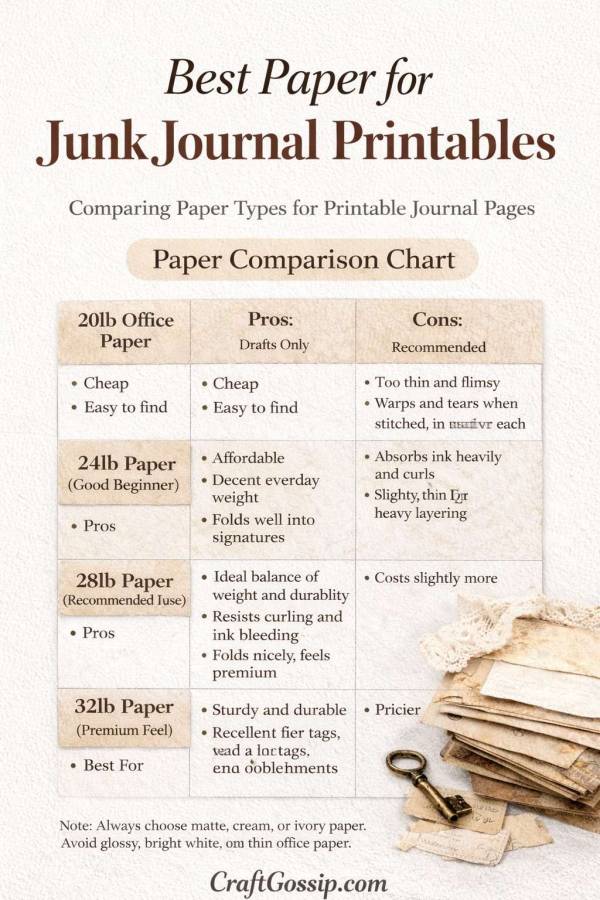
20lb Office Paper
This is standard printer paper. It’s fine for drafts — not ideal for junk journals.
Pros:
• Cheap
• Easy to find
Cons:
• Too thin
• Warps easily
• Tears when stitched
Not recommended for finished journals.
24lb Paper (Good Beginner Option)
This is a step up from basic office paper.
Pros:
• Affordable
• Noticeably sturdier
• Works well for beginner junk journals
Cons:
• Still slightly thin for heavy layering
If you’re just starting out, 24lb paper works perfectly fine.
28lb Paper (Best All-Round Choice)
If you want your printable junk journal pages to feel high quality, this is the sweet spot.
Pros:
• Durable without being stiff
• Folds beautifully into signatures
• Holds stitching well
• Resists curling
• Feels premium
This is my personal recommendation for most junk journal printables.
32lb Paper (Premium Feel)
This is thicker and feels luxurious.
Pros:
• Very sturdy
• Great for covers and tags
• Excellent for high-end printable junk journal kits
Cons:
• Slightly harder to fold
• Can make journals bulky
Perfect for covers, pockets, and embellishment pieces.
Matte vs Glossy Paper for Printable Journal Pages
This is important.
Always choose matte paper for junk journaling.
Glossy paper:
- Feels modern, not vintage
• Doesn’t absorb ink aging techniques
• Can smear
• Doesn’t layer well
Matte paper:
- Has a softer finish
• Absorbs tea and coffee dye
• Looks more authentic
• Layers beautifully
If you’re creating a vintage junk journal aesthetic, matte is non-negotiable.
Best Paper Color for Vintage Junk Journals
Bright white paper can make printable junk journal pages look too modern.
For a softer vintage feel, try:
- Cream
• Ivory
• Off-white
• Light beige
Even a subtle shift from bright white to ivory can make your printable kit look instantly aged.
This works especially well for:
- Botanical junk journal printables
• Victorian journal kits
• Shabby chic ephemera
• Cottagecore themes
Specialty Paper Options for Junk Journaling
If you want to elevate your printable junk journal kits, experiment with:
Linen Textured Paper
Adds subtle elegance and depth.
Recycled Fiber Paper
Has natural flecks that enhance vintage themes.
Light Kraft Paper
Beautiful for pockets and layered backgrounds.
Lightweight Cardstock
Ideal for:
• Tags
• Covers
• Envelopes
• Journaling cards
Mixing paper types creates texture and visual interest inside your journal.
How Paper Affects Tea and Coffee Dyeing
If you plan to age paper for junk journals, your paper choice becomes even more important.
Thinner paper:
- Warps easily
• Tears when wet
• Dries unevenly
28lb matte paper:
- Holds moisture better
• Dries flatter
• Absorbs dye evenly
• Looks beautifully aged
If aging paper is part of your process, skip basic office paper.
Preventing Curling When Printing Junk Journal Pages
Curling happens when heavy ink saturates thin paper.
To prevent curling:
- Use 24lb–28lb paper
• Adjust printer settings to “matte” or “high quality”
• Let pages dry flat
• Stack under heavy books
• Avoid printing in humid rooms
The paper weight alone solves 80% of curling issues.
Best Paper for Different Junk Journal Elements
Here’s a quick guide:
Background Pages
? 24lb–28lb matte cream paper
Tags & Journaling Cards
? 28lb–32lb or lightweight cardstock
Covers
? 32lb paper or cardstock
Pockets
? 28lb or kraft paper
Layering Pieces
? Mix paper types for dimension
Creating variety inside your journal makes it feel intentional and textured.
Is Expensive Paper Necessary?
Not at all.
You don’t need specialty art-store paper to create beautiful junk journal printables.
A good-quality 28lb matte cream printer paper from an office supply store works beautifully.
The goal isn’t perfection.
It’s durability and aesthetic harmony.
Final Thoughts on Choosing the Best Paper for Junk Journal Printables
If your junk journal has ever felt “flat” or flimsy, try upgrading your paper before changing anything else.
The right paper weight and finish will:
- Improve durability
• Enhance vintage aesthetics
• Reduce curling
• Make stitching easier
• Elevate your entire printable junk journal kit
Sometimes the smallest upgrade makes the biggest difference.
And once you print on the right paper?
You’ll never go back to basic copy paper again.